
UX in niche games: a necessity, not a luxury
- Nicolas Ferron
- Jul 21
- 3 min read
UX in niche games: a necessity, not a luxury
For the past few weeks, I’ve been talking a lot about UX, even trying to clarify what it actually means.
Today, I want to go deeper and focus on something specific: UX in niche games.
By “niche,” I mean fighting games, survival sims, hardcore stealth, colony builders, anything with a limited scope and a very specific audience.
There are two traps developers often fall into.

Niche game ≠ bad UX
It’s easy to assume that a niche audience is willing to accept a messy or obscure experience. After all, they’re passionate. They want complexity, right?
Yes, but not confusion.
Your mechanics can be deep and complex while still offering a clear and engaging experience.
Let’s take RimWorld as an example. The game is packed with deep systems and emergent situations, yet it’s never overwhelming. Its UI isn’t flashy, but it’s functional. Boxes, tabs, logical layouts. It gets the job done. And most importantly: it was clearly designed with the player in mind.
It even offers a solid tutorial to ease players into the experience. That’s not common in indie strategy sims.
The risks of bad UX
So what happens when UX is neglected?
Niche games live and die by their communities. Word of mouth is everything.If your UX is too messy, too dense, too aggressive, you’ll lose newcomers. If it’s too shallow, you’ll lose veterans.
There’s a fine line to walk. And one rule helps: Make your game deep, not complicated.
One common pitfall? Over-documenting instead of rethinking structure.Instead of streamlining information and flows, some devs pile on more tutorials and guides. That creates even more friction.
Sometimes, the best thing to do is stop and watch someone else play. Does it make sense? Do they understand what to do?
What good UX brings
On the other hand, good UX can open up a genre to new players and retain your core audience.
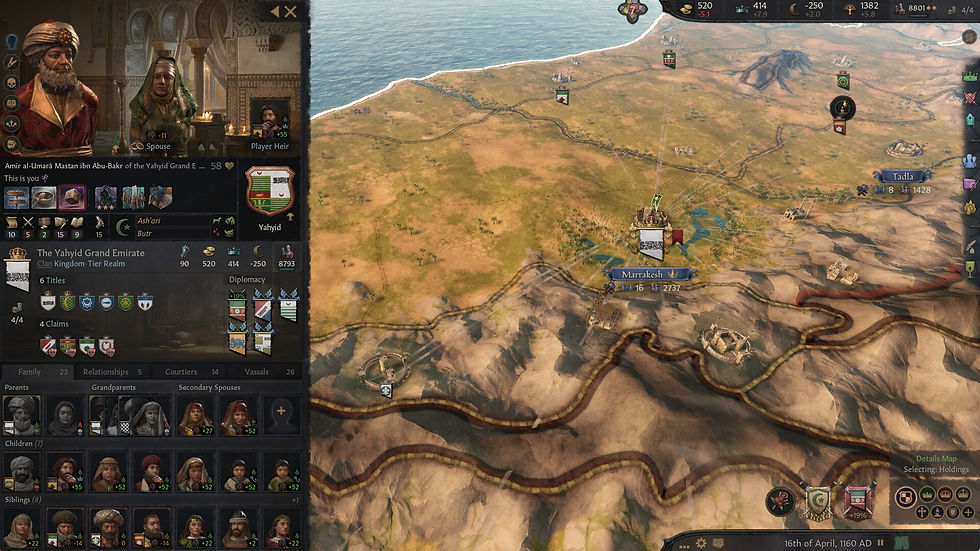
Paradox Interactive knows this very well.Their games are famously deep, Crusader Kings II let you rule medieval Europe in terrifying detail. But it was hard to get into.
For Crusader Kings III, they made a serious UX effort. Tutorials, nested tooltips, clearer feedback. The game became more approachable without losing its soul.
I recommend Gita Jackson’s piece on The Verge for more insight: Crusader Kings 3’s UI is a triumph of design
The goal isn’t to make everything easy, it’s to give players tools. If your systems are solid, players will experiment. That’s what makes sandbox games like Zelda: Breath of the Wild, RimWorld, or CK3 so compelling.
And even if your game isn’t a sandbox, that mindset can still help.
But what about the budget?
Yes, I hear it all the time: "We barely have enough to finish the game, how can we afford to think about UX?"
But UX isn’t a fancy menu you bolt on at the end. It’s part of the foundation. It’s thinking things through before you build them.
Let’s go back to RimWorld again, it started as a one-person project. No extravagant UI budget, yet the experience is clear and solid. It’s not perfect, but it respects the player.
You don’t need to go big. You just need to avoid friction.
Start small:
Font size and readability
Remappable controls
Basic controller support
These don’t break the bank, and they matter.
So what can small teams do?
When you design your game, ask yourself:
Who is this for?
Who do I want to play this?
Is my game understandable?
Am I giving the player enough to enjoy it?
And here are simple, actionable steps:
Playtests, even small-scale demos or feedback from friends can reveal a lot.
Map your systems, don’t just keep adding; step back and look at the whole structure.
Organize your information, HUD, inventory, menus: make sure everything flows.
Sometimes, spending one or two days thinking about structure can save weeks of confusion later.
Conclusion
UX isn’t a luxury, it’s a necessity.Especially in niche genres, where you need to respect both veterans and newcomers.
And if you feel stuck or short on time, that’s exactly the kind of work I do.
Let’s make your game more playable, and more enjoyable. Let’s design more fun.


Comments